


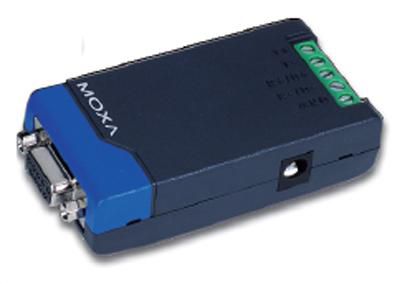
ID: 100057847
TCC-80 Moxa 41673

OEM Номер
EAN
5703431416734
На жаль, товару немає в наявності.
Орієнтовна ціна
4 534 ₴
Port-powered RS-232 to RS-422/485
The TCC-80/80I provides complete signal conversion between RS-232 and RS-422/485, without requiring an external power source. It supports both half duplex 2-wire RS-485 and full duplex 4-wire RS-422/485, either of which can be converted between RS-232's TxD and RxD lines. In addition,the TCC-80/80I's 15 KV ESD protection guards against damage from electrostatic discharge. The TCC-80I is the world's first high-speed, port-powered converter with 2.5 KV isolation.
Automatic data direction control is also provided for RS-485, in which the RS-485 driver is enabled automatically when the circuitry senses the TxD output from the RS-232 signal. This means that no programming effort is required to control the transmission direction of the RS-485 signal. Moreover, the TCC-80I patented LED port power indicator can let you check if TCC-80I is receiving enough power or not.
Port Power over RS-232
The RS-232 port of the TCC-80 is a DB9 female socket that can connect directly to the host PC, with power drawn from the TxD, RTS, or DTR line. Regardless of whether the signal is high or low, the TCC-80 can obtain enough power from the data/handshake line. However, external power can be used if the handshake line is not available, if the serial cable is too long, or if the RS-232 device is a low power device. For external power, a 5 to 12 VDC power supply can be connected using an adaptor or a USB power cord.
Port Power Dissipation
When installing a TCC-80 converter, it is important to pay attention to power consumption, RS-232 cable length, and RS-422/485 transmission distance. In general, the TCC-80 obtains 50 mW from the power source. Standard PC COM ports can provide 70 to 90 mW of power if the TxD, RTS, and DTR lines are connected. Moreover, the RS-232 cable should be shorter than 15 m (@ 9600 bps) to ensure that less power is lost from the host/device to the TCC-80. The remainder of the supplied power is used for transmitting the RS-422/485 signal.
Port Power and Optical Isolation
The RS-232 port of the TCC-80 is a DB9 female socket that can connect directly to the host PC, with power drawn from the TxD line. Electrical 2.5 KV isolation is achieved with a photo coupler that transforms the electrical signal into light, and then re-transforms the light back into an electrical signal on the other side. In this way, the two electrical circuits are completely isolated from each other. This also protects the devices from ground loop currents, reduces damage caused by data loss, and prevents damage to the communication interfaces.
Patented LED Port Power Indicator
It's easy enough to test the serial device with a multimeter to determine that the serial device will provide enough power to the media converter. However, it's even easier to let the TCC-80I test the device for you. Simply connect the TCC-80I to the device's RS-232 port and set the SW4 switch to Test mode. If the patented port power LED indicator lights up, the TCC-80I is receiving enough power. If the LED does not light up, you will need to attach an external power source to the TCC-80I.
Features:
- External power source supported but not required;
- High-speed transmission up to 115.2 Kbps;
- Compact size;
- Converts RS-422, and both 2-wire and 4-wire RS-485;
- RS-485 automatic data direction control;
- Automatic baudrate detection;
- 15 KV serial ESD protection;
- Built-in 120-ohm termination resistors;
- 2.5 KV isolation (for TCC-80I only);
- Patented LED port power indicator.
The TCC-80/80I provides complete signal conversion between RS-232 and RS-422/485, without requiring an external power source. It supports both half duplex 2-wire RS-485 and full duplex 4-wire RS-422/485, either of which can be converted between RS-232's TxD and RxD lines. In addition,the TCC-80/80I's 15 KV ESD protection guards against damage from electrostatic discharge. The TCC-80I is the world's first high-speed, port-powered converter with 2.5 KV isolation.
Automatic data direction control is also provided for RS-485, in which the RS-485 driver is enabled automatically when the circuitry senses the TxD output from the RS-232 signal. This means that no programming effort is required to control the transmission direction of the RS-485 signal. Moreover, the TCC-80I patented LED port power indicator can let you check if TCC-80I is receiving enough power or not.
Port Power over RS-232
The RS-232 port of the TCC-80 is a DB9 female socket that can connect directly to the host PC, with power drawn from the TxD, RTS, or DTR line. Regardless of whether the signal is high or low, the TCC-80 can obtain enough power from the data/handshake line. However, external power can be used if the handshake line is not available, if the serial cable is too long, or if the RS-232 device is a low power device. For external power, a 5 to 12 VDC power supply can be connected using an adaptor or a USB power cord.
Port Power Dissipation
When installing a TCC-80 converter, it is important to pay attention to power consumption, RS-232 cable length, and RS-422/485 transmission distance. In general, the TCC-80 obtains 50 mW from the power source. Standard PC COM ports can provide 70 to 90 mW of power if the TxD, RTS, and DTR lines are connected. Moreover, the RS-232 cable should be shorter than 15 m (@ 9600 bps) to ensure that less power is lost from the host/device to the TCC-80. The remainder of the supplied power is used for transmitting the RS-422/485 signal.
Port Power and Optical Isolation
The RS-232 port of the TCC-80 is a DB9 female socket that can connect directly to the host PC, with power drawn from the TxD line. Electrical 2.5 KV isolation is achieved with a photo coupler that transforms the electrical signal into light, and then re-transforms the light back into an electrical signal on the other side. In this way, the two electrical circuits are completely isolated from each other. This also protects the devices from ground loop currents, reduces damage caused by data loss, and prevents damage to the communication interfaces.
Patented LED Port Power Indicator
It's easy enough to test the serial device with a multimeter to determine that the serial device will provide enough power to the media converter. However, it's even easier to let the TCC-80I test the device for you. Simply connect the TCC-80I to the device's RS-232 port and set the SW4 switch to Test mode. If the patented port power LED indicator lights up, the TCC-80I is receiving enough power. If the LED does not light up, you will need to attach an external power source to the TCC-80I.
Features:
- External power source supported but not required;
- High-speed transmission up to 115.2 Kbps;
- Compact size;
- Converts RS-422, and both 2-wire and 4-wire RS-485;
- RS-485 automatic data direction control;
- Automatic baudrate detection;
- 15 KV serial ESD protection;
- Built-in 120-ohm termination resistors;
- 2.5 KV isolation (for TCC-80I only);
- Patented LED port power indicator.
Рекомендовані товари
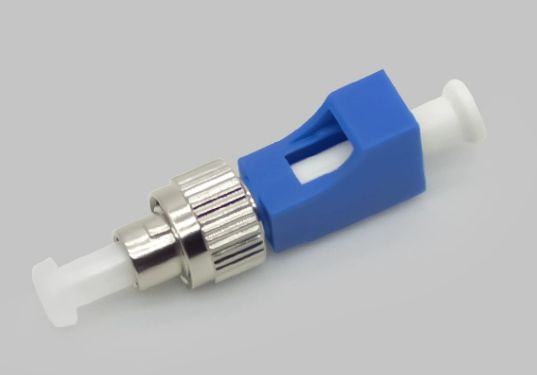
Lanview / MPN: LVO-1.25MM-ADAPTER
Адаптер 1.25мм для візуального
517 ₴
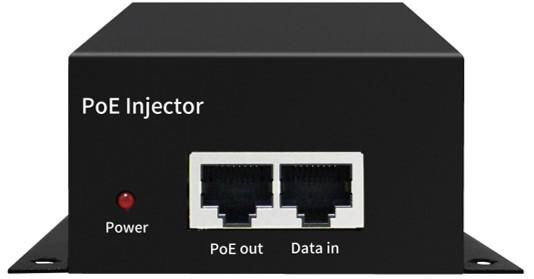
Ernitec / MPN: ELECTRA-POE-10GB-90W
1-канальний інжектор POE 90 Вт 10 Gigabit
3 596 ₴
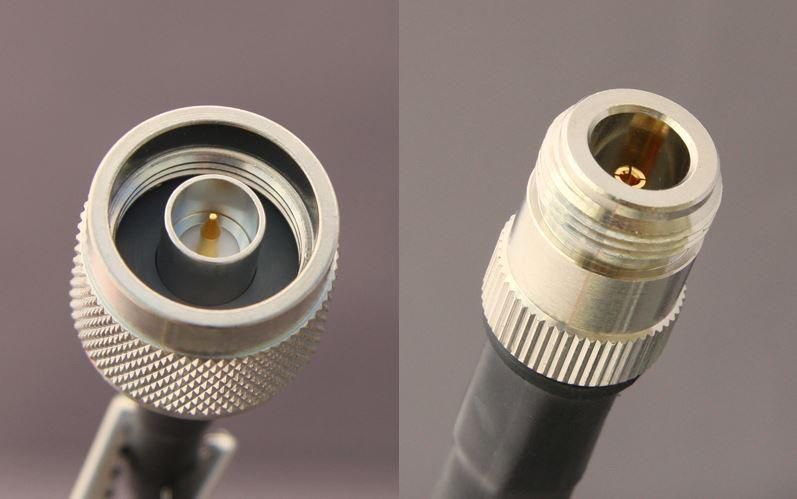
DMT / MPN: MC711030
3m N-Male/Ecoflex10/N-Female
3 166 ₴
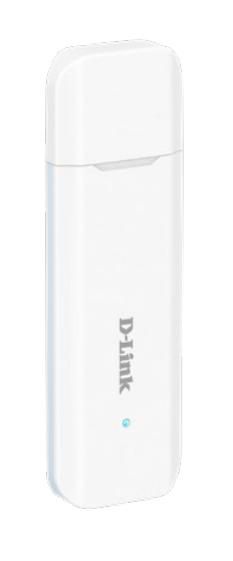
D-Link / MPN: DWM-222W/R_OLD
4G LTE AX300 Wi-Fi 6 USB
4 224 ₴
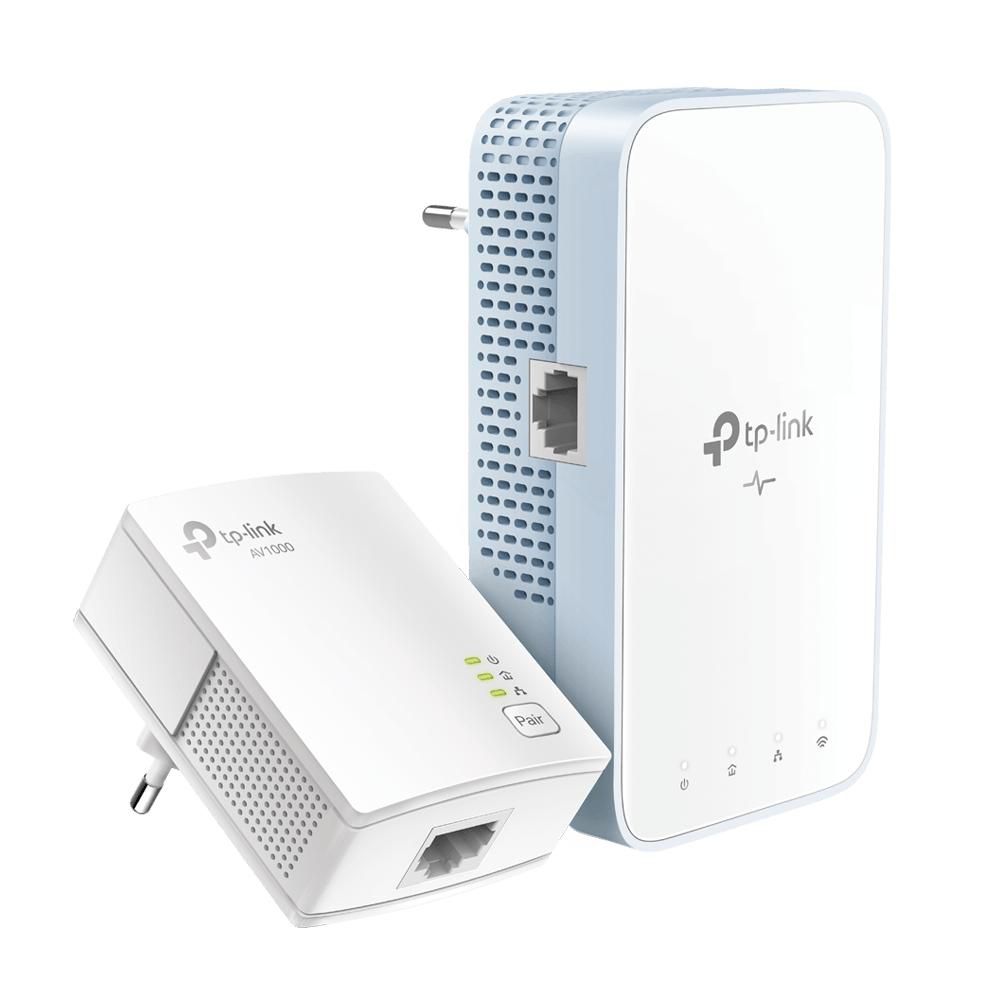
TP-Link / MPN: TL-WPA7517 KIT
Av1000 Gigabit Powerline Ac
3 399 ₴
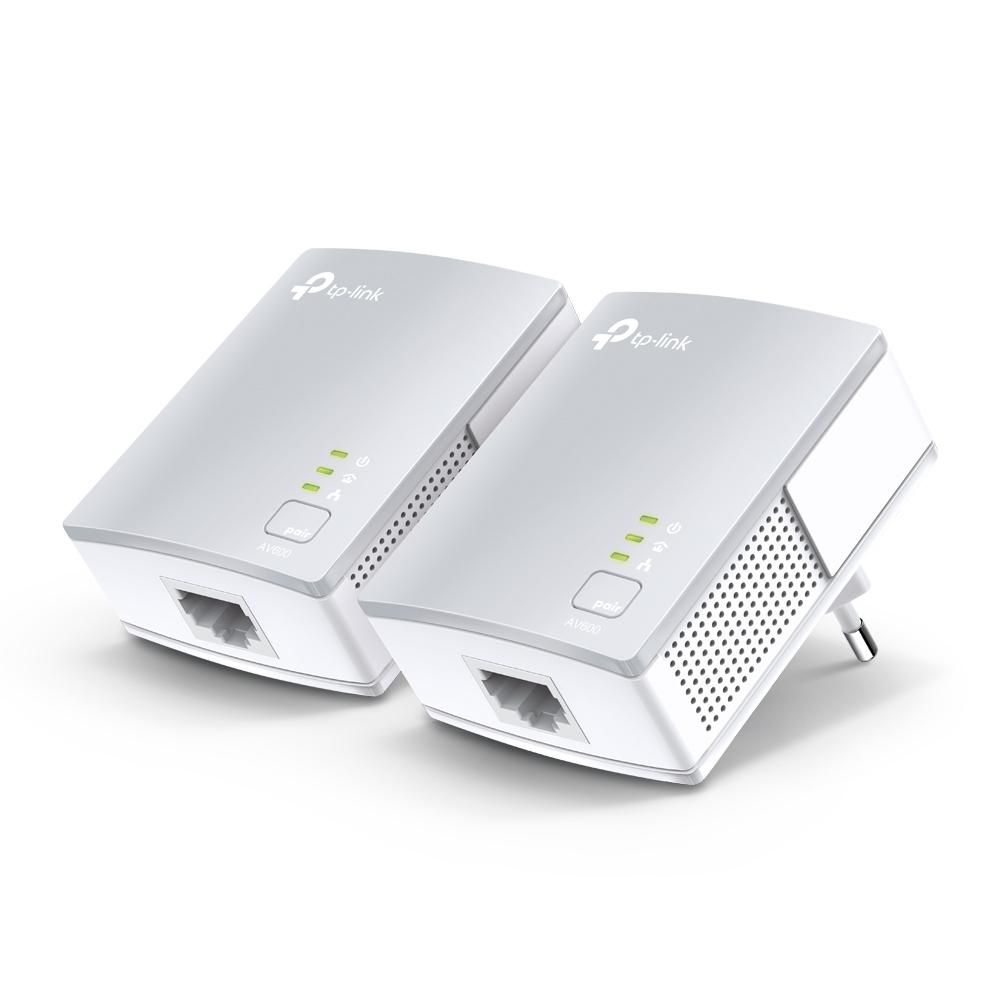
TP-Link / MPN: TL-PA411 KIT
Av500 Nano Powerline Adapter
3 541 ₴
Ви також дивились
До каталогу →

Acer / MPN: NB.C6A11.001
ACER MAIN BD.W/CPU.I7-11800H.HM570.QN20-E1-KC
Ціну уточнюйте

Samsung / MPN: 2911-000461
DUPLEXER
Ціну уточнюйте

Lenovo / MPN: 01KP615-RFB
MECH_ASM CFF V3 PSU DUMMY
Ціну уточнюйте
Lenovo / MPN: 03KM648
CABLE MCIOx8 - RA MCIOx8
Ціну уточнюйте

Huawei / MPN: 02310MUH
Кабель QSFP+,40G,High Speed Direct-attach Cables,3 m,QSFP+38M QSFP-40G-CU3M
5 940 ₴
Lenovo / MPN: 91P9735
IBM LOWER CASE
Ціну уточнюйте